Post-surgical recovery
Cruciate repair, patella luxation, fracture fixation and spinal surgery. Controlled loading protects the repair while rebuilding the muscle lost to crate rest.
Canine Service
Assessment, hands-on treatment and a home programme you can realistically keep up with, for dogs recovering from surgery, living with arthritis, or slowing down with age.
Physiotherapy is most effective when it starts early. These are the cases we see most often, but if you are unsure whether your dog fits, ask.
Cruciate repair, patella luxation, fracture fixation and spinal surgery. Controlled loading protects the repair while rebuilding the muscle lost to crate rest.
Hip and elbow dysplasia, osteoarthritis and chronic joint pain, managed alongside your vet's pain relief plan rather than instead of it.
IVDD, degenerative myelopathy and fibrocartilaginous embolism, where the priority is safe, repeatable movement and owner confidence at home.
Hesitation at stairs, difficulty rising and shortened walks. Small changes to the home environment often matter as much as the treatment itself.
Muscle strains, iliopsoas injury and compensatory back pain, which frequently sit behind an intermittent limp with no obvious cause.
Agility, gundog and service dogs. Conditioning, symmetry screening and early detection of the small asymmetries that become injuries.
Interactive 3D Guide
An interactive 3D model of the areas treated most often: neck, shoulder, elbow, carpus, thoracic and lumbar spine, hip, stifle and hock. Select any area to see the signs owners tend to notice first, and how physiotherapy helps.
Explore the dog in 3DTechniques
Slow-motion video at walk and trot, on the flat and over transitions, to identify where the load is being avoided.
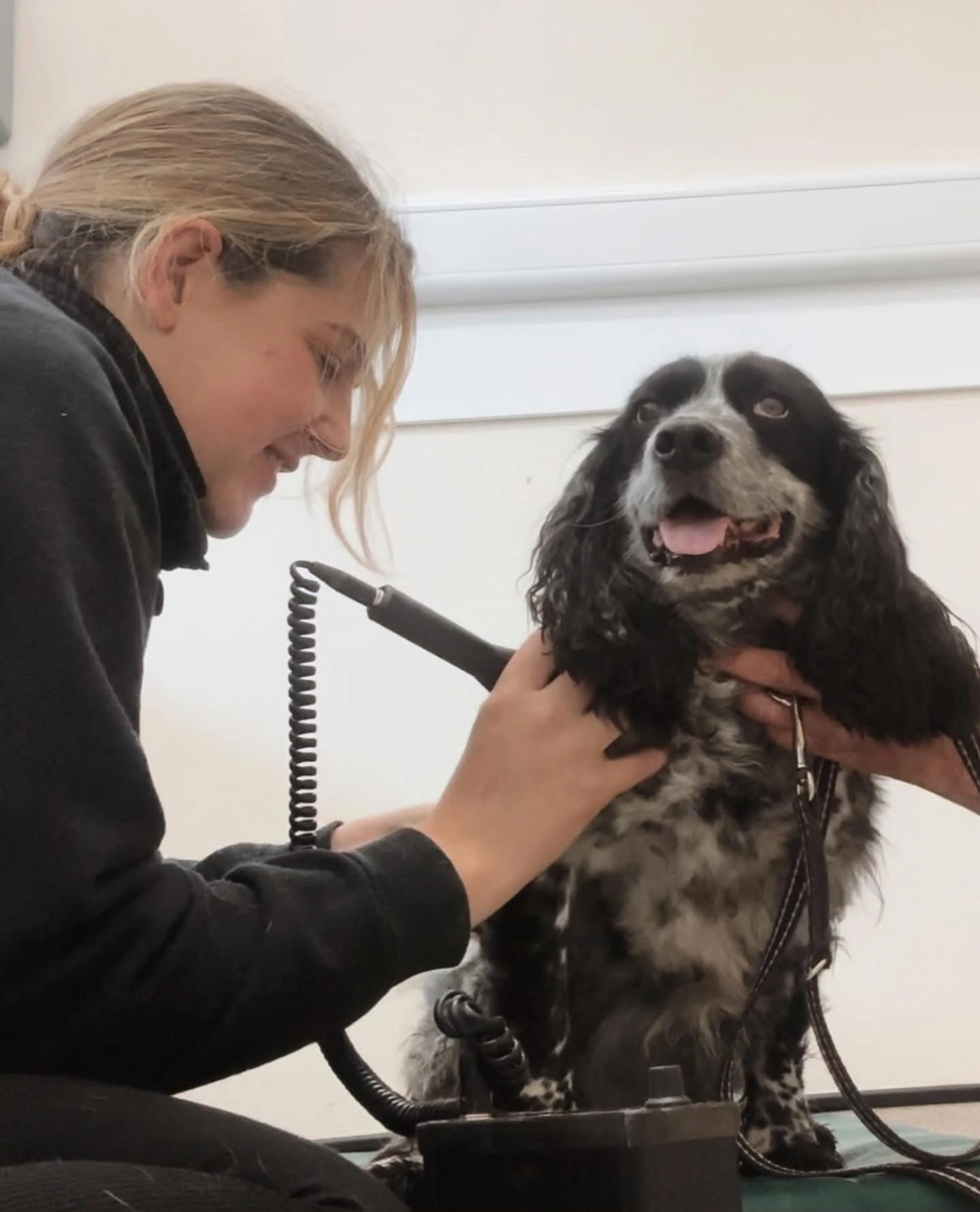
Soft tissue release, joint mobilisation and stretching, alongside WINBACK tecar, laser therapy and PEMFT where indicated. Megan is a certified WINBACK specialist. More on our techniques →
Balance work, poles and controlled strengthening, progressed as your dog copes with each stage.
Three or four exercises, filmed with your own dog, so there is no guessing about what good looks like.
Sessions & Fees
Most UK insurance policies cover veterinary physiotherapy on referral. We provide itemised invoices and a written report for every claim.
Initial Physiotherapy Consultation & Treatment
Approx. 90 minutes, in your own home
£68
Maintenance Physiotherapy Treatment
Approx. 45 minutes, including plan progression
£55
WINBACK Tecar Therapy (single area)
Requires a full gait analysis and assessment first
£37
Additional Tecar Therapy
Per extra area treated in the same session
£10
Gait Analysis & Assessment
Required before any WINBACK tecar therapy begins
£25
Block of WINBACK Tecar Sessions
Multiple sessions booked together
POA
All dogs must undergo a full gait analysis and assessment before WINBACK tecar therapy begins. Special rates are available for canine clinic days. Visits within 25 miles of Scarborough are included; mileage charges may apply to visits beyond that radius.
Common Questions
If your question is not here, call and ask. It is usually faster than filling in a form.
07817 001834Yes. Veterinary consent is a legal requirement before an animal can be treated by a physiotherapist. Send us your practice details and we request it on your behalf; it usually takes a day or two.
Most post-surgical cases need four to six sessions over eight to twelve weeks. Arthritis and senior mobility cases are usually managed with maintenance treatment every four to eight weeks. You will get an honest estimate at the first assessment.
Most UK policies cover veterinary physiotherapy when it is carried out on veterinary referral. We provide itemised invoices and treatment reports for your claim, and can send them directly to your insurer on request.
No. Treatment is carried out at your dog's pace, on the floor, with breaks whenever they need one. Most dogs settle within a few minutes and many fall asleep during manual therapy.
Yes. Home visits are available across the travel area and are often better for anxious dogs or those with limited mobility. Visits within 25 miles of Scarborough are included in the session fee, and mileage charges may apply to visits beyond that radius.
A first conversation costs nothing and will tell you whether an assessment is worth booking.
Contact MC Veterinary Physiotherapy